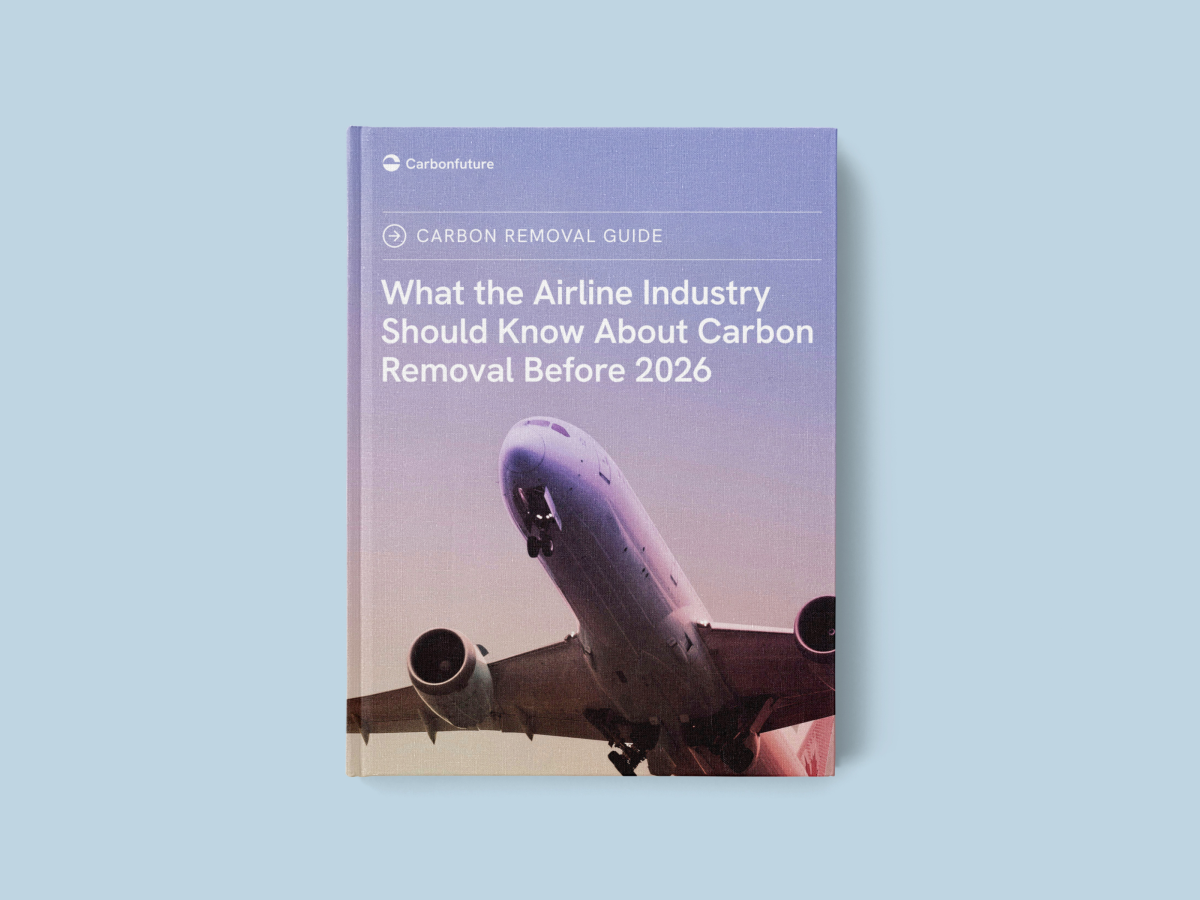
Buyer Guide

What the Airline Industry Should Know About Carbon Removal Before 2026

Why Airlines Should Be Thinking About Carbon Removal Now

It’s a time of major change for aviation, with initiatives underway to decarbonize the industry through the use of fleet improvements, emissions reduction efforts and the widespread adoption of sustainable aviation fuel (SAF). But with CORSIA and other compliance schemes looming on the horizon, carbon dioxide removal (CDR) stands to play a critical role in aviation sustainability initiatives.

What You’ll Learn

  • De-risking your sustainability investments: How you can reduce exposure to price spikes and complement your existing strategy.
  • Key strategies you should be tracking in 2026: Why durable CDR is key to addressing hard-to-abate emissions.
  • Lessons from aviation pioneers: Learn how Switzerland’s leading helicopter company is using durable CDR to realize its climate ambitions.
  • Crafting a CDR portfolio: How a tailored portfolio can help you achieve your sustainability goals and diversify risk.
  • Building a long-term plan on a budget: The ways to incorporate high-quality carbon removal into a sustainability strategy at a time when budgets are tight.

Why It Matters

The carbon credit market is moving fast, and this is already affecting the airline industry.

The time to act is now:

  • Reduce the impact of market volatility: High-quality supply of CDR credits is scarce, so understanding the market today can save you money tomorrow.
  • Diversify your approach: Pairing your SAF strategy with durable CDR can help you realize your goals faster and maximize long-term benefits.
  • Build brand and customer loyalty: Impactful climate action through credible, high-quality removals can differentiate your brand by demonstrating proof rather than promises.
Learn how durable carbon removal can benefit your organization beyond emissions reduction.