News
Boeing and Carbonfuture Sign Multi-Year Agreement for at least 40,000 Tonnes of Durable Carbon Removal
Boeing and Carbonfuture Sign Multi-Year Agreement for at least 40,000 Tonnes of Durable Carbon Removal
Learn More


Article
by
•
January 15, 2026
Most companies today are measuring their carbon footprint - a critical first step toward accountability. But carbon accounting alone doesn’t deliver impact.
Carbon accounting tools help organizations understand where emissions come from and how they evolve over time. Durable carbon removal helps companies take the next step: closing the gap between what can be reduced and what remains.
As sustainability leaders work to deliver on ambitious net-zero targets, one thing is clear: we won’t reach those goals through emissions cuts alone. Even with the most effective decarbonization strategies, residual emissions will persist - and that’s where durable carbon removal comes in. As The Guardian recently reported, leading climate scientists state that carbon removal is “essential” to meet global climate goals - not optional, and not something that can be postponed. The scientific consensus is clear: to achieve net zero, we must pair deep emissions reductions with the permanent removal of CO₂ already in the atmosphere.
Many organizations now track and report their emissions - a vital foundation for corporate climate action — but translating those numbers into meaningful progress remains a challenge.
To meet growing expectations under frameworks like the EU Carbon Removal and Carbon Farming (CRCF) Regulation, companies must evolve from transparency to tangible results.
“The market for durable carbon removal is still taking shape. There’s no single playbook or perfect path. But progress starts with action. If each company starts somewhere, together we can build the scale needed to reach net zero.”, — Julie Mansfield, Head of Americas Business Development at Carbonfuture.
Not all carbon credits have the same impact. Avoidance and reduction projects prevent or lower emissions, but only durable carbon removal, such as Biochar CarbonRemoval, BECCS, or DACCS, removes existing CO₂ from the atmosphere and stores it for centuries or longer.
This permanence is what makes durable carbon removal a cornerstone of credible net-zero strategies.
Traditional carbon offsets were once the go-to solution for climate action. But short-lived storage and inconsistent verification have eroded confidence in many legacy offset credits.
By integrating verified, data-backed, durable carbon removal credits into their climate portfolios, companies can prove measurable, science-aligned progress.
This shift marks a broader evolution: from symbolic offsetting to outcome-driven carbon accounting that truly aligns with net-zero commitments.
How can companies bridge the gap between measurement and real progress?
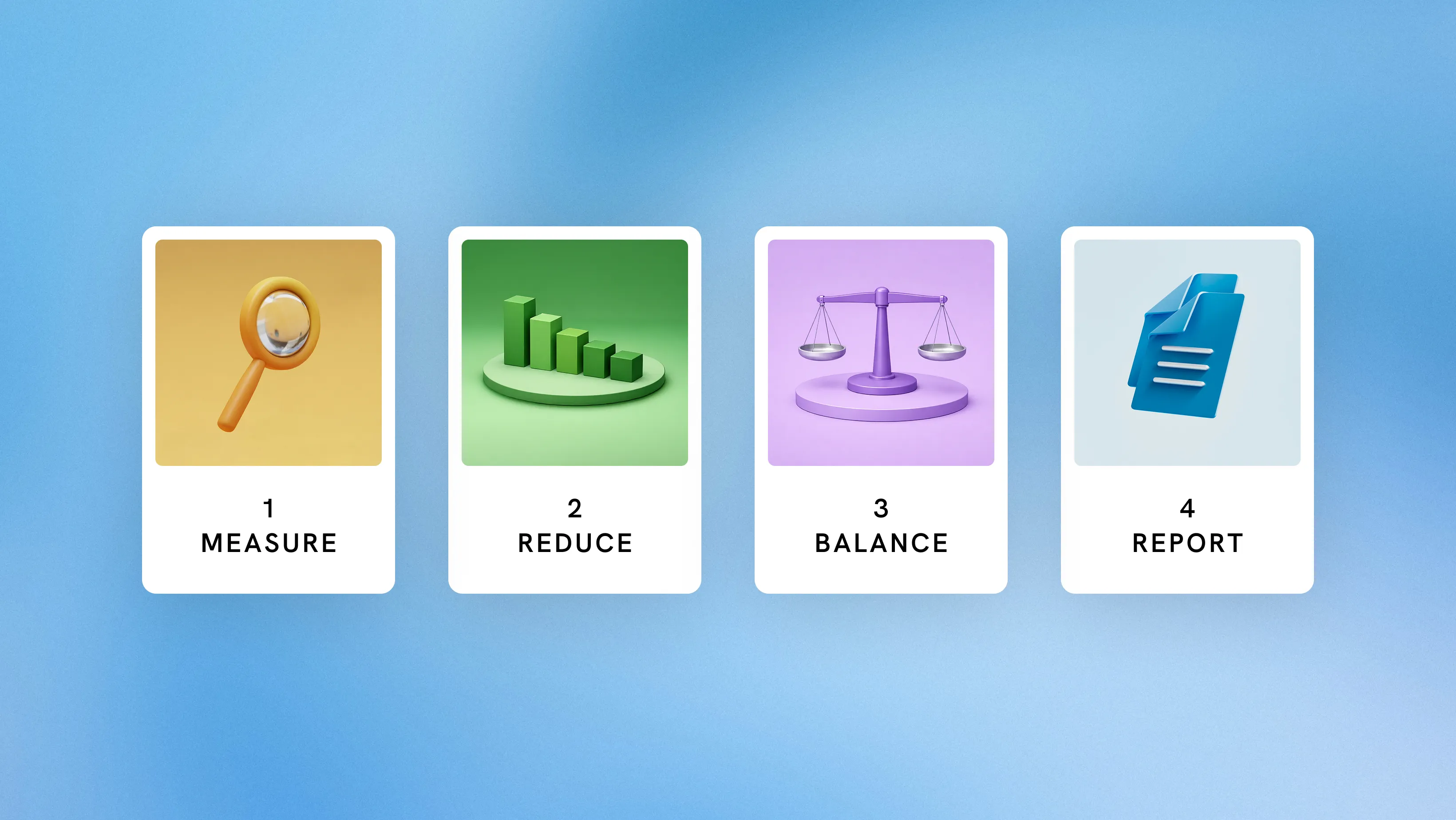
Here’s a practical approach to integrating carbon removal into your corporate carbon accounting process:
“Durable removals make climate accounting future-proof,” says Mansfield. “They help companies move from ambition to measurable, compliance-ready results.”
Companies that start integrating durable carbon removal today aren’t just preparing for future regulation; they’re building resilience and credibility across their ESG reporting and sustainability strategy.
Global pioneers like Microsoft and Swiss Re are already building carbon removal portfolios alongside deep emission cuts.
At Carbonfuture, we help organizations turn climate ambition into verifiable results.
Our tailored portfolios of high-quality, durable carbon removal projects are backed by transparent data through our digital Trust Infrastructure.
We make it easy to:
Whether you’re just starting or scaling your climate program, Carbonfuture helps you move from footprint to durable impact.
Download our guide: Carbon Removal for Net-Zero: A Strategic Guide for Corporate Sustainability Professionals

At Carbonfuture, we build trust throughout the carbon removal journey with our rigorous, data-driven approach, ensuring unmatched quality and reliability of carbon removal.